The flicker of a campfire, the fierce roar of a volcano, the gentle glow of a candle—fire has captivated humanity since time immemorial. It's a fundamental force, a paradox of destruction and creation that has shaped our survival, spiritual beliefs, and, of course, our myths. Among the most potent manifestations of this ancient power are the Origins and Creation Myths of Fire Elementals. These aren't just stories; they're echoes of humanity's attempts to understand the untamed, transformative energy that can both forge steel and reduce forests to ash.
If you’ve ever felt an inexplicable pull towards a crackling flame or pondered the unseen forces animating the natural world, you’re tapping into a collective consciousness that has spawned these fiery entities. From Western occult traditions to ancient Eastern philosophies, elementals of fire ignite our imagination, embodying passion, change, and raw, untamed power.
At a glance: What You'll Discover About Fire Elementals
- Ancient Roots: Fire elementals are born from humanity's earliest interactions with fire, a crucial element for survival and spiritual insight.
- Diverse Origins: Their creation myths range from primordial cosmic forces and divine sparks to the personification of natural phenomena.
- Symbolic Power: They universally represent transformation, purification, passion, and the cyclical nature of destruction and rebirth.
- Cultural Manifestations: From Western Salamanders to Middle Eastern Ifrit, these beings appear across global mythologies with distinct characteristics.
- Modern Relevance: Understanding these myths offers insights into personal growth, our relationship with nature, and even contemporary challenges.
- Beyond the Myth: Learn how these narratives inform spiritual practices and psychological interpretations today.
What Exactly Is a Fire Elemental? Unpacking the Core Concept
Before we dive into their fiery genesis, let's establish what we mean by a "fire elemental." In the grand tapestry of mythological creatures and spiritual beliefs, an elemental is generally understood as a being composed of, or intrinsically linked to, one of the classical elements: Earth, Air, Fire, or Water. These aren't just spirits associated with fire; they are living embodiments of its essence. They are the concentrated will and consciousness of fire itself.
Fire, as an element, is dynamic and volatile. It thrives on consumption, constantly transforming what it touches into something new, often through destruction. This makes fire elementals potent symbols of change, energy, and purification. They are not merely beasts made of flame; they are conscious forces that reflect fire's inherent dualities—life-giving warmth and devastating inferno. For a deeper dive into the essence of Fire Elementals, you might want to read our dedicated article on the subject: Learn more about the Fire Elemental.
The earliest human civilizations revered fire for its duality: a divine gift crucial for survival (cooking, warmth, protection) and a terrifying force of nature (wildfires, volcanoes). This reverence naturally led to the personification of fire, evolving into the diverse elementals we explore today. They bridge the physical and spiritual, serving as conduits between the human realm and the divine, often invoked in rituals as a medium for communication, illumination, and cleansing.
The Spark of Creation: Universal Threads in Fire Elemental Myths
Across cultures, the creation of fire elementals often mirrors the larger cosmic narratives of fire itself: a primeval force, a divine gift, or an intrinsic aspect of the natural world coming to life. These common threads highlight humanity’s shared awe and understanding of fire’s fundamental role in existence.
Primordial Flames: From Cosmic Dawn to Fiery Beings
Many creation myths begin with a state of chaos or nothingness, out of which the world is formed. In several traditions, fire is not just part of this creation; it is the primordial force.
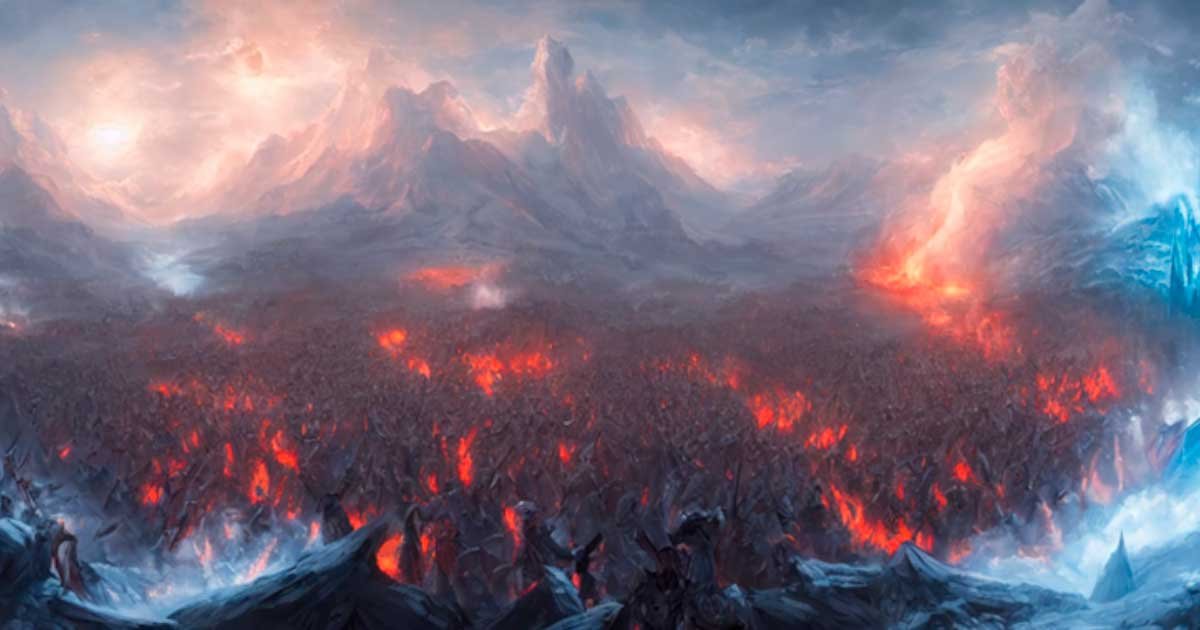
- Norse Mythology's Muspelheim: Before the worlds existed, there was Ginnungagap, a vast, empty void flanked by Niflheim, a realm of ice, and Muspelheim, a realm of fire. Muspelheim, ruled by the giant Surtur, was a fiery, bright, and hot land. When the ice and fire met in Ginnungagap, the giant Ymir and the cosmic cow Audhumbla were formed, sparking all life. The fire elementals, or rather the "Sons of Muspel" (Múspellsmegir), are considered inhabitants of this fiery realm, beings born directly from this primordial heat. They are destructive forces, destined to engulf the world in Ragnarök.
- Zoroastrianism's Holy Fire: While not explicitly "elementals" in the classical sense, the veneration of fire (Atar) in Zoroastrianism as a sacred, purifying, and creative force is foundational. Ahura Mazda, the Wise Lord, created the world, and fire is seen as his light and truth, a conduit to the divine. This deep respect for fire as a living, sacred entity informs an understanding of its potential for personification.
- Ancient Egyptian Creation: In some Egyptian cosmogonies, creation began with Nun, the watery chaos. From this chaos rose the primeval mound, and often, a lotus flower from which Ra, the sun god, emerged, bringing light and heat. While not creating specific "fire elementals," this narrative showcases light and heat as fundamental to the world's dawn, laying conceptual groundwork for fire as an original, life-giving force.
These narratives underscore fire as a foundational, even sentient, element present at the very moment of creation, its essence powerful enough to birth worlds and beings.
The Divine Spark: Fire as a Gift and a Giver of Consciousness
Another potent origin story for fire elementals centers on a divine act—a god bestowing fire, and with it, life and consciousness, upon the world or specific beings.
- Prometheus and the Gift to Humanity: In Greek mythology, Prometheus famously stole fire from the gods (specifically from Mount Olympus or Hephaestus's forge) and gave it to humanity. This act wasn't just about warmth; it symbolized enlightenment, knowledge, and creativity, transforming humanity from brutish creatures to beings capable of craft and culture. While Prometheus didn't create "fire elementals" directly, his myth powerfully links fire to the spark of consciousness, intellect, and the divine potential within living beings. It's a powerful allegorical origin for the "spark" that might animate an elemental.
- Hinduism's Agni: Agni, the god of fire, is one of the most important Vedic deities, representing purity, transformation, and the bridge between humans and the gods. He is central to Hindu rituals (Yajnas), where offerings are made into his sacred flame. Agni is said to have myriad forms and is present in all fires. While there aren't specific "Agni elementals" in the Western sense, the numerous fire spirits, deities, and aspects associated with Agni across Hindu traditions can be seen as manifestations of this divine fire, bringing transformative energy and purification. These include various types of Ganas (attendants) or even Yakshas associated with heat and light.
In these traditions, fire elementals, or their closest equivalents, arise from a divine gift, imbuing them with sacred power and linking them directly to the heavens.
Elemental Incarnations: Life from Nature's Fiery Heart
Beyond cosmic beginnings or divine intervention, many cultures see fire elementals as the very consciousness of natural fiery phenomena—volcanoes, lightning, wildfires—given form.
- Nature Spirits and Local Lore: Across various indigenous cultures, specific fire spirits are often tied to geographical features or natural events. A volcanic spirit might be understood as an ancient elemental, a guardian of its fiery depths. A desert people might speak of fiery beings born of the intense sun and scorching sands. These spirits are not "created" in a single event but rather are the living essence of their environment, existing as long as the phenomenon does. This perspective highlights the interconnectedness of all things in the natural world. Many of these beings fall into the broader category of nature spirits and their roles.
These more localized myths emphasize fire elementals as intrinsic parts of the natural world, living extensions of its power and mystery.
Famous Fiery Figures: Elemental Manifestations Across Mythologies
While the core concept of a "fire elemental" holds true, the specific forms and stories vary wildly across cultures, reflecting distinct understandings of fire’s role in their lives.
Western Esotericism: The Salamander
Perhaps the most famous "fire elemental" in Western tradition is the Salamander. Coined by Paracelsus in the 16th century, a Swiss physician and alchemist, the concept of the Salamander draws on ancient beliefs about the amphibian's supposed immunity to fire (a misconception from its habit of hibernating in logs, only to emerge when the log was thrown on a fire).
- Origins: Paracelsus systemized the classical elements, assigning a distinct elemental being to each. For fire, it was the Salamander. He described them as thin, swift, and fiery, sometimes appearing as lizards, sometimes as human-like figures of pure flame.
- Symbolism: In alchemy and ceremonial magic, Salamanders are associated with the south, with passion, transformation, courage, and destruction. They are believed to assist in purification, spiritual illumination, and the forging of will. Working with them is a key aspect of understanding elemental magic.
- Characteristics: Often depicted as small, lizard-like creatures with fiery skin or as beings of pure flame, they are said to be volatile and require respect and careful handling. Their touch can both burn and purify.
Middle Eastern Lore: The Ifrit and Djinn
In Islamic mythology and pre-Islamic Arabian folklore, Djinn (or Jinn) are sentient beings created by Allah from "smokeless fire." Among the various classes of Djinn, the Ifrit (or Afrit) are considered the most powerful and often malevolent, described as massive winged beings of fire or smoke.
- Origins: The Quran states that Allah created humanity from clay and the Djinn from smokeless fire. This distinct creation origin highlights their fundamental difference from humans and their fiery essence. Ifrit are not necessarily "elementals" in the Western sense, but their fiery composition and immense power certainly align them with the spirit of fire.
- Symbolism: Ifrit symbolize untamed, destructive power, often associated with dangerous places, curses, and malevolent intent. However, like all Djinn, they also possess free will and can be good or evil, though Ifrit lean towards the formidable.
- Characteristics: Often depicted as formidable, strong, and cunning, capable of shapeshifting and possessing immense magical abilities. Their fiery nature makes them hot-headed and passionate, but also capable of great feats.
Norse Mythology: Surtur and the Sons of Muspel
As mentioned earlier, the realm of Muspelheim in Norse cosmology is intrinsically tied to fire and its inhabitants.
- Surtur: The first and most powerful being of Muspelheim, Surtur is a primordial jötunn (giant) who exists before the creation of the world. He wields a flaming sword brighter than the sun and is destined to destroy the world by fire at Ragnarök, the Twilight of the Gods. He is, in essence, an elemental force given consciousness and immense power.
- Sons of Muspel: These are the fiery inhabitants of Muspelheim, who will ride with Surtur during Ragnarök to engulf the cosmos in flames. They are beings born of the primordial fire, extensions of its destructive, transformative power.
- Symbolism: Surtur and his kin represent the destructive, cleansing, and ultimately cyclical aspect of fire—a force that ends one cycle to allow for a new beginning, albeit a cataclysmic one.
Other Fiery Figures: Blurring the Lines
It's common for cultures to have fiery creatures that aren't strictly "elementals" but share similar characteristics, leading to fascinating cross-mythological comparisons:
- The Phoenix (Egyptian/Greek): While not an elemental, this mythical bird, born from ashes, is the ultimate symbol of fire's power of rebirth and renewal. Its fiery self-immolation and resurrection speak to fire's transformative magic.
- Dragons: Many dragons across global mythologies (e.g., European, Chinese) are strongly associated with fire, breathing it, or having fiery domains. While often depicted as having scales and physical bodies, their deep connection to fire aligns them symbolically with elemental power.
- Oni (Japanese): While typically portrayed as demons or ogres, some Oni are depicted with fiery powers or are associated with natural disasters like wildfires, suggesting a connection to uncontrolled elemental forces.
These examples illustrate how fire's profound impact has manifested in a fascinating array of mythological creatures, some purely elemental, others embodying its spirit through different forms.
The Psychology and Spirituality of Fire Elementals
Beyond their mythical origins, fire elementals resonate deeply within the human psyche and spiritual journey. They serve as potent archetypes and symbols for internal and external processes.
Inner Transformation and Passion
Psychologically, engaging with the concept of fire elementals can be a way to understand and work with our own inner fire:
- Passion and Drive: Fire elementals embody raw passion, motivation, and creative drive. They represent the spark of inspiration, the burning desire to achieve, and the energy that fuels our actions. When we feel "fired up" about something, we are experiencing our own internal fire elemental at work.
- Transformation and Change: Just as fire transforms raw materials, fire elementals symbolize our capacity for personal growth, shedding old habits, and embracing new phases of life. They remind us that change, though sometimes uncomfortable, is essential for evolution.
- Purification: Fire has long been a symbol of purification. Psychologically, this translates to burning away emotional baggage, negative thought patterns, and destructive behaviors to emerge cleansed and renewed.
Spiritual Awakening and Enlightenment
Spiritually, fire elementals are often associated with higher consciousness and divine connection:
- Enlightenment: The "light" of fire is often equated with spiritual illumination, insight, and the dispelling of ignorance. Encountering or invoking fire elementals can be seen as a way to hasten spiritual awakening.
- Divine Connection: Fire has historically been a medium for communicating with the divine. Shamans and spiritual practitioners use fire in rituals to connect with spirit guides, cleanse sacred spaces, and facilitate spiritual journeys. Fire elementals, as embodiments of this sacred flame, can act as powerful allies in these practices.
- Balancing the Elements: Many spiritual traditions emphasize the importance of balancing all four classical elements within oneself. The fire elemental reminds us to integrate passion with groundedness (Earth), intellect (Air), and emotional depth (Water) for holistic well-being. This ongoing process is often called balancing your inner elements.
Interacting with Fire Elementals: Respect, Ritual, and Readiness
For those interested in exploring the energetic or spiritual aspects of fire elementals, understanding how to approach them respectfully and safely is crucial. These are not pets; they are powerful, autonomous forces.
Approach with Respect and Clear Intent
Fire elementals embody transformative power, which can be overwhelming if approached carelessly.
- Honoring Their Nature: Recognize that fire elementals are not inherently "good" or "evil." They are forces of nature, responding to energy and intent. They are destructive when uncontrolled, life-giving when harnessed.
- Clear Purpose: If you intend to work with fire energy or connect with a fire elemental (e.g., through meditation or ritual), have a clear, ethical purpose. Are you seeking inspiration, purification, courage, or transformation? Be specific and respectful.
- Safety First: When working with actual fire (candles, bonfires), always prioritize physical safety. These practices are symbolic, but the element itself is very real.
Rituals and Practices
Many traditional and modern spiritual practices incorporate fire energy:
- Candle Magic: Simple rituals using candles to focus intent, manifest desires, or cleanse energies. The flame itself becomes a conduit for elemental fire.
- Bonfire Ceremonies: Used in many cultures for purification, release, and community bonding. The large, uncontrolled flame facilitates letting go and embracing new beginnings.
- Meditation with Fire: Focusing on a flame can induce a meditative state, promoting clarity, introspection, and connection to inner passion. Visualizing inner fire can also awaken personal power.
- Elemental Altars: Creating a dedicated space with representations of fire (candles, red stones, incense) can help in connecting with and honoring the fire element.
Pitfalls to Avoid
- Disrespect or Demands: Never demand anything from an elemental. Approach with humility and respect, asking for assistance, not commanding.
- Lack of Control: Without proper grounding and self-control, working with fire energy can lead to impulsiveness, burnout, or emotional volatility.
- Fear or Recklessness: Balance courage with caution. Acknowledge fire's power without being paralyzed by fear, but also without being reckless.
- Conflating Myth with Reality: While these myths are potent, remember they are symbolic. Fire elementals operate on an energetic or spiritual plane, not necessarily as physical beings you can physically interact with.
Why These Fiery Myths Still Blaze Today
The ancient tales of fire elementals aren't just fascinating relics of the past. They continue to offer profound insights into our world and ourselves.
Understanding Our Relationship with Nature
In an era grappling with climate change and environmental degradation, these myths remind us of the power and sentience within nature. The destructive wildfires we witness today are a stark reminder of fire's raw, untamed force—a force that ancient peoples understood to be alive. Recognizing the "spirit" of fire encourages a more respectful, reciprocal relationship with our planet's fundamental elements.
A Mirror for Personal Growth
The transformative power of fire is a timeless allegory for the human journey. We all face moments where old parts of ourselves must "burn away" to make room for new growth. The fire elemental, in all its mythical forms, teaches us courage in the face of change, resilience in the ashes, and the eternal promise of renewal. Embracing your inner fire means embracing your passion, your drive, and your capacity to rebuild and rise stronger.
Fueling Modern Spirituality and Creativity
Contemporary spiritual practices frequently draw upon elemental archetypes for self-discovery, healing, and manifestation. Artists, writers, and innovators often speak of a "creative fire" or a "spark of inspiration"—language directly echoing the ancient myths of fire elementals. These narratives continue to inspire, providing a framework for understanding the unseen energies that shape our lives and our world.
The stories of fire elementals are far more than fanciful tales; they are deep cultural reservoirs of wisdom about power, transformation, and life itself. By exploring their origins and diverse manifestations, we not only connect with ancient human understanding but also ignite a deeper appreciation for the vibrant, ever-changing fire that pulses through our own lives and the cosmos.